
Upcoming CCWRT Program
Wednesday, November 11, 2026 at 6:00 p.m.
Report of the 2026 Roundtable Field Trip Posted
Roundtable President John Syroney wrote an excellent report about the Roundtable’s superb 2026 field trip to the Shenandoah Valley. John’s report has been posted on the Roundtable’s website. The participants on the field trip are extremely grateful to John for organizing a terrific field trip, and the participants are also grateful to Gary Ecelbarger, who was the guide for the field trip and was outstanding. John’s field trip report can be accessed by clicking on this link.

November 2026 Roundtable Meeting: “After Gettysburg: Race to the Potomac – Meade’s Pursuit and Lee’s Retreat”
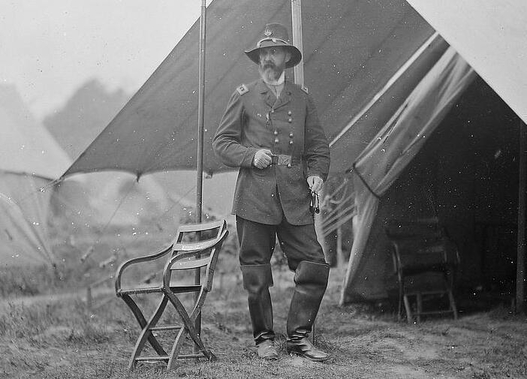
The November 2026 meeting of the Cleveland Civil War Roundtable will take place on November 11, 2026 beginning at 6:00 p.m. This will be an in-person meeting. The speaker will be Brad Gottfried, and the title of Brad’s presentation is “After Gettysburg: Race to the Potomac – Meade’s Pursuit and Lee’s Retreat.”
The nation held its breath for eleven days after the Battle of Gettysburg. Would Meade be able to destroy Lee’s beaten army, or would it escape to Virginia to fight another day? Would Lee’s wagon trains, filled with supplies and the wounded, safely reach the Potomac River despite the marauding Union cavalry? This stimulating presentation follows the activities and exploits of each army as they made their way to the Potomac River after the battle. The presentation will also consider whether Meade was too slow, whether Lee conducted an effective retreat, and whether Lincoln was justified in his frustration with Meade.
During the week of the Cleveland Civil War Roundtable’s November 11, 2026 meeting, Brad Gottfried is giving two other presentations in the Cleveland area. These presentations are as follows.
“Lee’s Invasions of the North: Antietam and Gettysburg – A Comparison”
Tuesday, November 10, 2026 at 6:00 p.m., Elyria Public Library
This presentation is part of the 2026-2027 program of the Quincy Gillmore Civil War Roundtable.
“Lincoln Goes to Gettysburg”
Thursday, November 12, 2026 at 7:00 p.m., Westlake Porter Public Library
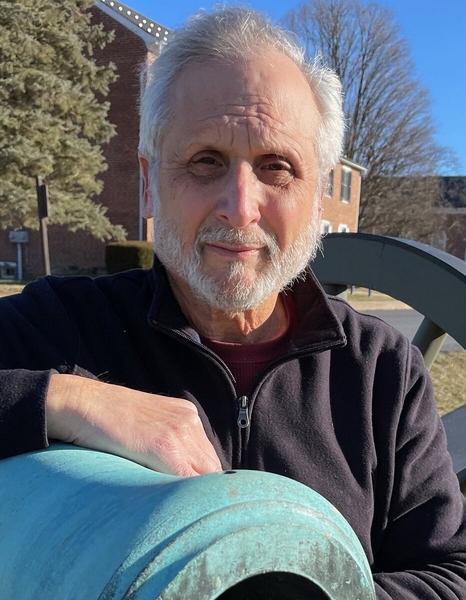
Brad Gottfried earned a Ph.D. in Zoology and served as a college educator for over 40 years, rising to the presidency of two colleges before he retired in 2017. He has written 23 books on the Civil War. Brad is a Gettysburg Licensed Town Guide and an Antietam Licensed Battlefield Guide.
Linda Gottfried earned a BFA and served as a graphic designer and development officer at several colleges and nonprofit organizations before retiring in 2015. She now spends her time as a sculptor and enjoying retirement. Several of her pieces have won awards. The Gottfrieds have five children and seven grandchildren, and they live in Fayetteville, Pennsylvania.
Brad and Linda have collaborated on four projects: Hell Comes to Southern Maryland (published by Turning Point Publications), Lincoln Comes to Gettysburg: The Creation of the Soldiers’ National Cemetery and Lincoln’s Gettysburg Address (published by the Emerging Civil War), and The Antietam Paintings by James Hope (published by Turning Point Publications) as well as a book based on tonight’s presentation, Race to the Potomac: Meade and Lee After Gettysburg, July 4-14 (published by the Emerging Civil War). They have completed another book: Grant and Meade: An Uneasy Alliance.
For the presentation by Brad Gottfried to the Cleveland Civil War Roundtable on November 11, 2026, the meeting will be held at the Holiday Inn Independence (6001 Rockside Road, Independence, Ohio 44131). Reservations should be made by sending an email to the Roundtable’s reservation email account (clecwrt@gmail.com). Reservations must be made no later than eight days before the meeting (i.e., no later than November 3, 2026). When making a reservation, please include your name and the number and names of any guests. Please also indicate the meal choice for you (and any guests). The three meal options are braised beef pot roast, parmesan-encrusted white fish, and grilled eggplant bruschetta. If a reservation needs to be canceled, it must be canceled no later than November 10, 2026. Dinner will be provided to anyone who has a reservation. The cost of dinner is $40 per person. It is not necessary to purchase dinner in order to attend the meeting, but reservations are requested from everyone in order to have sufficient chairs set up in the meeting room. Those who plan to attend the meeting without purchasing dinner should indicate “no dinner” when they make a reservation. Other details can be found on the Reservations web page by clicking on this link.

Meeting Summary: October 2026 – “The Dawes Brothers”
The October 2026 meeting of the Cleveland Civil War Roundtable featured a very engrossing presentation by Steve Magnusen. Steve’s presentation focused on the Dawes brothers, Rufus and Ephraim, with emphasis on their Civil War service. Steve began his presentation by discussing why he chose to study the Dawes brothers, and he gave a few reasons for this. Among those reasons was that each of the brothers wrote recollections of the Civil War not long after the war ended, which means that their recollections have a better chance of not being affected by distortion due to erroneous memory recall. Another reason is that the brothers had abundant preserved documentation, which provides much material for historians. Also, both brothers had heroic actions during the Civil War, which makes their war experiences compelling. Another reason is that they were members of a family with an exceptional history.
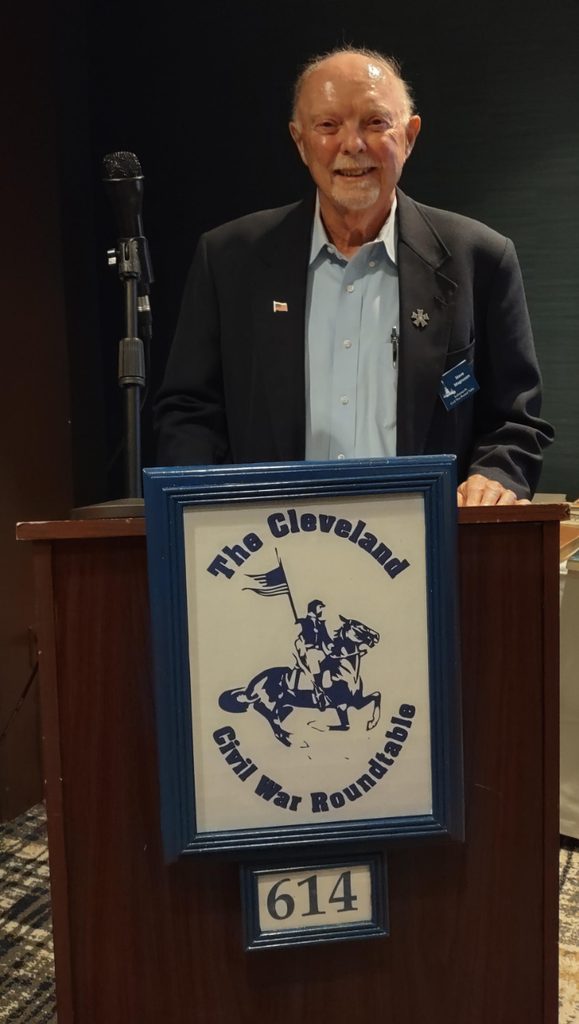
Steve then discussed some of that exceptional family history. He noted that William Dawes, the great-grandfather of Rufus and Ephraim, rode with Paul Revere, or, as Steve aptly stated, Paul Revere rode with William Dawes. Steve also said that maternal ancestors of the Dawes brothers played essential roles in bringing about the migration of settlers into Ohio and in the formation of settlements in that future state, specifically Marietta. In addition, these maternal ancestors were the driving force behind the policies that molded the Northwest Territory, in particular the exclusion of slavery. Steve further noted that the father of the Dawes brothers, Henry Dawes, was not an exemplary husband or parent. Henry’s wife Sarah Dawes (née Cutler) was very unhappy in her marriage and eventually left Henry and then obtained a marital separation. The agreement for this required that Rufus and Ephraim live with their father, who moved to Wisconsin.
At the outbreak of the Civil War in 1861, Rufus recruited a regiment, the 6th Wisconsin Volunteer Infantry Regiment, which became part of the Iron Brigade. Ephraim enlisted in the 53rd Ohio Volunteer Infantry Regiment, which became part of a division commanded by William Tecumseh Sherman. Steve went on to describe the Civil War service of the two brothers, and some of their experiences were truly impressive. For example, Ephraim’s regiment was at Shiloh, and on the morning of that battle, when the Confederates emerged from the woods and fired a volley in the direction of Sherman, Ephraim called out to Sherman, who was unaware that he was under fire. In response to Ephraim’s warning, Sherman raised his hand in front of his face and received a minor wound in his hand. But if not for Ephraim’s warning, Sherman could have been shot in the head, which would have obviously had a major impact on the war.
As for Rufus, he was in the major battles in the Eastern Theater including Antietam, Fredericksburg, and Gettysburg among others. At Chancellorsville, his regiment along with the 24th Michigan made a crossing of the Rappahannock River under fire from Confederates on the other side of the river. This crossing was so hazardous that one member of the 6th Wisconsin wrote afterward that when his regiment was given the order to do this, he “never saw anything that appeared so much like certain death as this movement.” But the crossing was accomplished, and the Confederates were driven off, which allowed the rest of the I Corps to cross the river.
Steve discussed that when enlistments were about to end in 1864, the War Department provided incentives for men to reenlist. One incentive was the promise not to consolidate regiments that reenlisted, and another was to give men who reenlisted a sleeve chevron as a mark of honor to distinguish them. Both the 6th Wisconsin and the 53rd Ohio had 75% reenlistment. It was after reenlisting that one of the Dawes brothers received a very serious wound. At the Battle of Dallas, which was part of Sherman’s Atlanta Campaign, Ephraim was severely wounded in the face by a bullet that took off part of his lower jaw and lower teeth. He was honorably discharged and later had surgery for facial reconstruction. As Steve described, the chloroform anesthesia was not totally effective, and Ephraim could feel the surgeon cutting into his face during the procedure. The procedure and false teeth did restore Ephraim’s face quite well, and he grew a beard to conceal the scars.
Steve ended his presentation by discussing the post-war years of the brothers. Both did well in business, although both endured financial hardships during the Panic of 1873. Both brothers married, Rufus to Mary Gates in 1864 and Ephraim to Frances Bosworth in 1866, but only Rufus had children. Steve noted that one of Rufus’ sons, Charles, served with John Pershing in World War I and was the vice president under Calvin Coolidge.
The Roundtable is grateful to Steve for his detailed and engrossing presentation about the Dawes brothers. Presentations like Steve’s are extremely beneficial, because such presentations focus on the people who were responsible for carrying out the difficult and dangerous tasks that made the successful outcomes in the Civil War possible. We thank Steve for educating us about the lives and Civil War experiences of Rufus and Ephraim Dawes, two people who made essential and heroic contributions to the Union war effort.

October 2026 Charger Uploaded
The October 2026 issue of The Charger has been uploaded. It can be accessed by clicking on this link.

Cleveland Civil War Roundtable Named 2026 Civil War Round Table of the Year
Emerging Civil War (ECW) is an organization that provides a national platform for sharing original scholarship related to the American Civil War. ECW is the collaborative effort of more than 35 historians who are committed to sharing the story of the Civil War in a way that is accessible for the general public. ECW’s initiatives include its award-winning series of books published by Savas Beatie, LLC; an annual symposium; a speakers’ bureau; and a daily blog (www.emergingcivilwar.com). ECW announced on January 30, 2026 that it was sponsoring a Civil War Round Table of the Year Award for 2026 and that all Civil War roundtables were invited to submit nominations for that award. In its announcement, ECW stated that the award is to cover the previous calendar year, and ECW listed several criteria for the award. These criteria included meetings, membership, external education initiatives, external preservation initiatives, and ECW participation. The Cleveland Civil War Roundtable, with input from several members of the Executive Committee, wrote a nomination for the award and submitted it for consideration. (Our Roundtable’s nomination is available on our website by clicking on this link.)
After reviewing the nominations, ECW selected the Cleveland Civil War Roundtable as the 2026 Civil War Round Table of the Year. In its announcement of this decision, ECW noted that while many Civil War roundtables in the country are decreasing in membership, our Roundtable has had a robust increase in membership of 25% per year in recent years, and we routinely have between 70 and 120 attendees at our monthly meetings. ECW also indicated that our Roundtable has an annual field trip to a Civil War site and invites members of other Civil War roundtables to participate, which is an effective way to foster camaraderie between different roundtables.
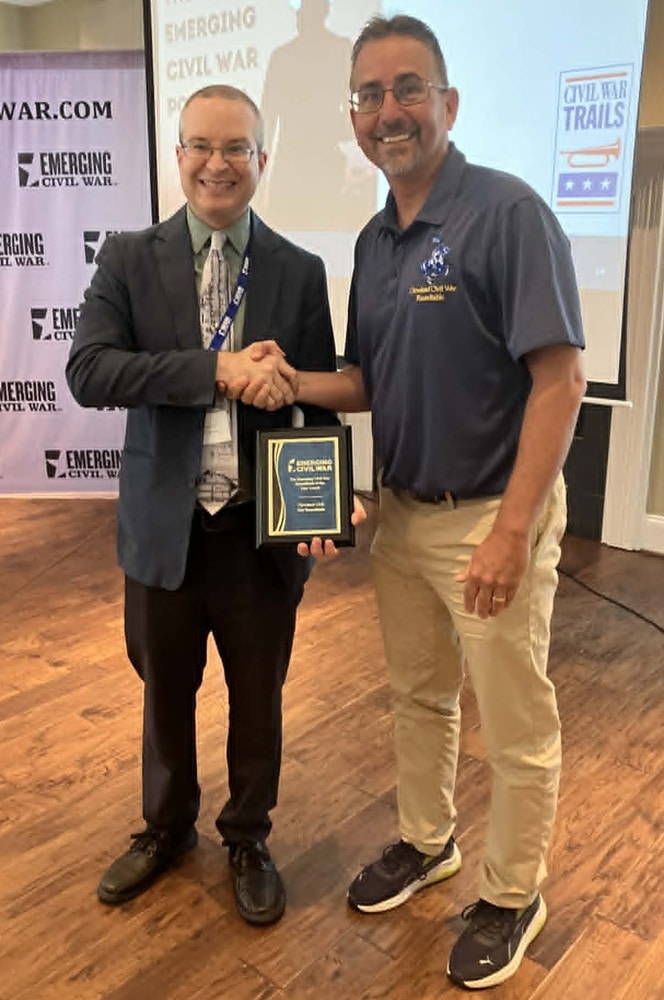
ECW also noted that in 2025 our Roundtable organized a week-long program that featured living historian Dr. Curt Fields, the nation’s preeminent portrayer of Ulysses S. Grant. This program included several presentations by Dr. Fields at schools and at evening venues, and it involved over 1,300 students and over 450 community members through Dr. Fields’ lectures. Also discussed in ECW’s announcement of the award is the participation of our Roundtable in the annual National History Day competition, where members help students by acting as judges for the students’ projects. In addition, our Roundtable sponsors our own awards to National History Day students for exemplary projects related to the Civil War. ECW said that activities such as these demonstrate that our Roundtable extends beyond our meetings to community programs that expand knowledge of the Civil War across the city.
ECW concluded its announcement by stating that our Roundtable has shown that it is possible nowadays for Civil War roundtables not just to survive, but to thrive via engaging meetings, community outreach, and an astute and wide-ranging perspective.
We are extremely grateful to ECW for giving this award to our organization and thrilled that our Roundtable has been so recognized. Being named the 2026 Civil War Round Table of the Year is a tremendous honor and a powerful affirmation of the purpose and dedication that define our organization. Our collective efforts have long reflected a standard of excellence, and it is gratifying that what we do as an organization has been nationally recognized.
What makes this moment especially profound is that it represents far more than a single submission. This award reflects years of sustained commitment to strong programming, meaningful engagement, and the preservation and thoughtful interpretation of Civil War history. This distinction meaningfully elevates our Roundtable within the broader Civil War community, and it is something we should carry with pride, not only as acknowledgment of past efforts, but also as inspiration for the future.
Congratulations to every member of the Cleveland Civil War Roundtable. Each of you has played a part in shaping an organization that is respected, valued, and now nationally recognized for its contributions. This is a collective accomplishment and a testament to the passion, care, and devotion that characterize our organization. To every member of our Roundtable as we begin the 2026-2027 meetings, welcome to the Civil War Round Table of the Year.

Program Schedules of Other Cleveland-Area Civil War Roundtables Posted on This Website
In addition to the Cleveland Civil War Roundtable, two other Civil War roundtables in the Cleveland area are the Northeast Ohio Civil War Roundtable and the Quincy Gillmore Civil War Roundtable. Both of these roundtables, like the Cleveland Civil War Roundtable, have a lecture series with monthly meetings that feature a presentation about a Civil War-related (or sometimes other historical) topic. To make visitors to our website aware of these presentations, the program schedules of the Northeast Ohio Civil War Roundtable and the Quincy Gillmore Civil War Roundtable have been posted on this website. Both of these program schedules have a nice mix of interesting topics and speakers, and all of the presentations are worth attending. Below are links to the web pages for each of these program schedules. Each web page contains the program schedule and also information about attending the meetings as well as a link to a downloadable PDF of the program schedule.
The Northeast Ohio Civil War Roundtable’s program schedule can be accessed by clicking on this link.
The Quincy Gillmore Civil War Roundtable’s program schedule can be accessed by clicking on this link.

Membership Roster and Contact Information
We have worked very hard to improve our membership database and contact information this year, but we know we probably have more work to do. Please be sure to keep us advised of changes in contact information by sending us the information at clecwrt@gmail.com. We monitor that email account on a regular basis, so this would be a big help in making sure we can keep you informed of group activities. If you want to see what has been posted on our Facebook page, you do not have to become a member of the Roundtable. Everyone is welcome to view our Facebook page. These can also be accessed by googling “Cleveland Civil War Roundtable” and “Facebook” and then clicking on the appropriate link in the search results.

Cleveland Civil War Roundtable Monthly Meetings
Meeting Time: Monthly meetings of the Cleveland Civil War Roundtable are typically held on the second Wednesday of the month from September through May. Meetings ordinarily begin with a social hour at 6 p.m., followed by dinner at 6:30 p.m. and the program at 7:00 p.m. Meetings usually end by around 9:00 p.m. All of our meetings are currently held in person, and barring any future health-related restrictions, we anticipate that all meetings will be held in person.
Meeting Location: In-person meetings are held at the Holiday Inn Independence, 6001 Rockside Road, Independence, Ohio 44131.
Reservations: For in-person meetings, you must make a dinner reservation for any meeting you plan to attend. Reservations must be made no later than eight days prior to the meeting (so we can give a head count to the caterer). For information on making a dinner reservation, click on this link. It is not necessary to purchase dinner in order to attend a meeting. Anyone is welcome to attend the presentation without purchasing dinner. We ask that people who are not purchasing dinner make a reservation so that enough chairs will be set up in the meeting room. Simply make a reservation at the reservation email address (ccwrtreserve@gmail.com) and indicate “no dinner” in the reservation. If dinner is not purchased, there is no charge to attend a meeting.